As a world-class clean energy company, PT Pertamina Geothermal Energy Tbk (PGE) (IDX: PGEO) reaffirmed its commitment to positioning Indonesia as a green energy giant through during its participation in the Conference of the Parties (COP) 29 in Baku, Azerbaijan. At the UN-hosted climate change conference, PGE emphasized geothermal energy’s critical role as a catalyst for energy transition and a strategic solution to the climate crisis.
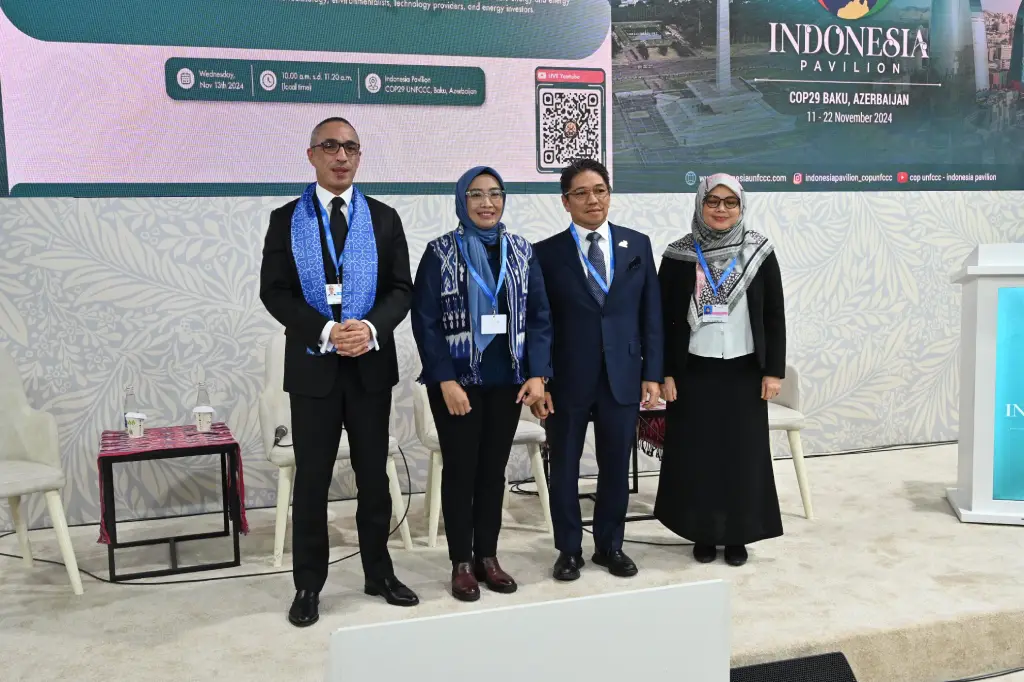
CEO of PGE, Julfi Hadi, stressed the urgency of transitioning to green energy, particularly for Indonesia, a country highly vulnerable to climate change due to its archipelagic nature. Speaking at the panel discussion titled “Energy Transition: Innovations, Sustainability Approaches, Strategic Efforts and Initiatives to Achieve Indonesia’s Climate Goals” at the COP29 Indonesia pavilion, Wednesday (13/11), Julfi Hadi underlined the exceptional potential of Indonesia’s new and renewable energy (NRE) resources, particularly geothermal energy, as a viable replacement for fossil fuels.
“As a country with the second largest geothermal reserve in the world, Indonesia holds both the responsibility and the great opportunity to lead the global energy transition. With its baseload energy characteristic, geothermal energy is the ideal solution to replace fossil fuels, accelerate the transition to clean energy and put a halt to climate change,” Julfi Hadi added.
The panel, which discussed the development of clean energy to achieve Indonesia’s climate targets, also featured notable speakers such as the Director General of New, Renewable Energy, and Energy Conservation of the Ministry of Energy and Mineral Resources Eniya Listiani Dewi, Executive Vice President of Energy Transition and Sustainability of PT PLN (Persero) Kamia Handayani, and the Director of Sustainable Energy Hub, United Nations Development Program (UNDP) Riad Meddeb. Julfi Hadi highlighted the challenges in developing geothermal energy, particularly the underutilization, with only 10% of the country’s 24 GW potential currently tapped. Within the momentum of COP29, he called for enhanced global partnership to overcome the challenges and accelerate the development of geothermal energy.
“The development of geothermal energy faces numerous challenges, from technical issues and regulations to funding. However, with global partnership, we can transform these challenges into opportunities. It is imperative that countries push the establishment of an ecosystem that supports the development of geothermal, especially through strengthening the green financing sector. Stronger investment in this sector is key to accelerate the transition to a cleaner future.”
Julfi Hadi also outlined how accelerating geothermal development could position Indonesia as a global green energy giant. This aligns with the national roadmap for NRE which aims for 10.5 GW of geothermal installed capacity by 2035. Achieving this target is projected to attract USD 17 – 18 billion in investment, contribute up to USD 22 billion to national GDP, and create up to one million jobs.
To support this vision, PGE remains committed to increasing its installed capacity to 1.5 GW by 2030 through implementing a new paradigm in geothermal development that focuses on efficiency and innovation, including:
- Phased development to minimize risks;
- Adoption of new commercially-proven technologies to increase efficiency;
- Leverage collaboration and high volume to build market and consolidate demand;
- Exploration of new “green businesses”, such as green hydrogen and green ammonia; and
- Promoting local manufacturing of key geothermal power plant components.
PGE also recorded a notable achievement in implementing Environmental, Social, and Governance (ESG) principles, earning an ESG risk score of 7.1 from Sustainalitycs, making it a leader in the utilities sector and the renewable energy sub-sector with the lowest risk.
“NRE potentials, especially geothermal, is our greatest asset not only in supporting Indonesia’s climate commitment and achieving net zero emissions by 2060, but also in fostering a sustainable economic development and national energy self-sufficiency,” Julfi Hadi concluded.